
Rallies
Six weekends a year, and one that runs for ten days
A rally is simply a weekend when club boats arrange to be in the same place. Owners bring people who haven’t got a boat, everybody eats ashore together on the Saturday, and the whole thing is far less formal than the word suggests.
IF YOU’VE NOT BEEN ON ONE
Nobody arrives owning a boat
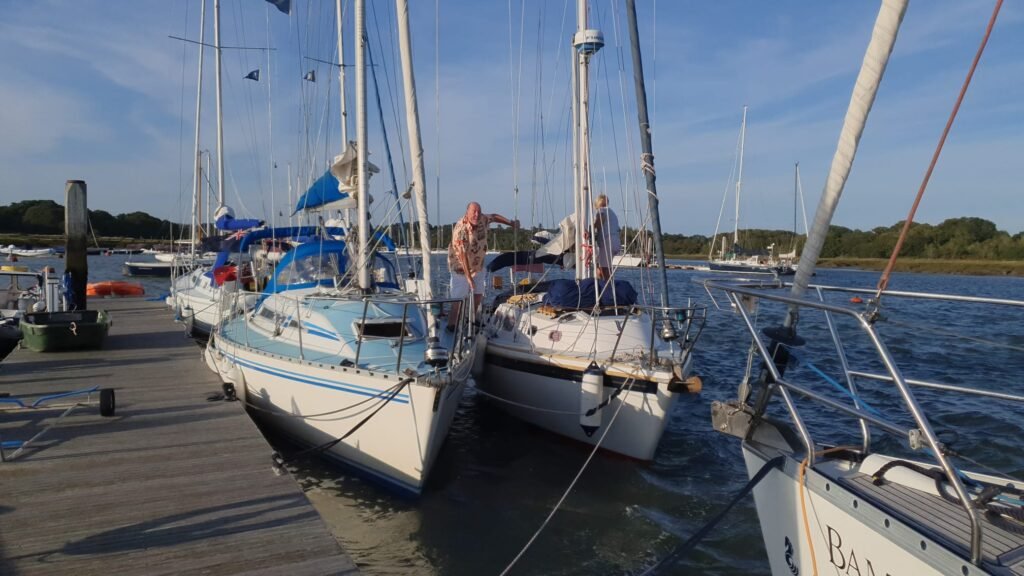
A rally is a weekend away. Boats leave from wherever they’re kept on the south coast, meet at an agreed harbour, and raft up together for the night. On the Saturday evening everyone eats ashore, usually at another sailing club, and on the Sunday the boats go home.
The part that matters if you haven’t got a boat: owners take crew. That is the normal arrangement, not a favour being done. Five to eight boats go on a typical rally and there are usually more berths than there are people asking for them. It isn’t free — crew share the berthing, the fuel and the food — but it’s split between everyone on board rather than charged by the skipper, and usually comes to £30 to £50 a head for the weekend. More on the occasions when the club has to charter a boat.
You are not expected to know anything. Skippers like a mixed crew and will tell you what they want done. Bring warm layers and shoes that won’t mark a deck.
IF YOU KEEP A BOAT
The other half of the arrangement
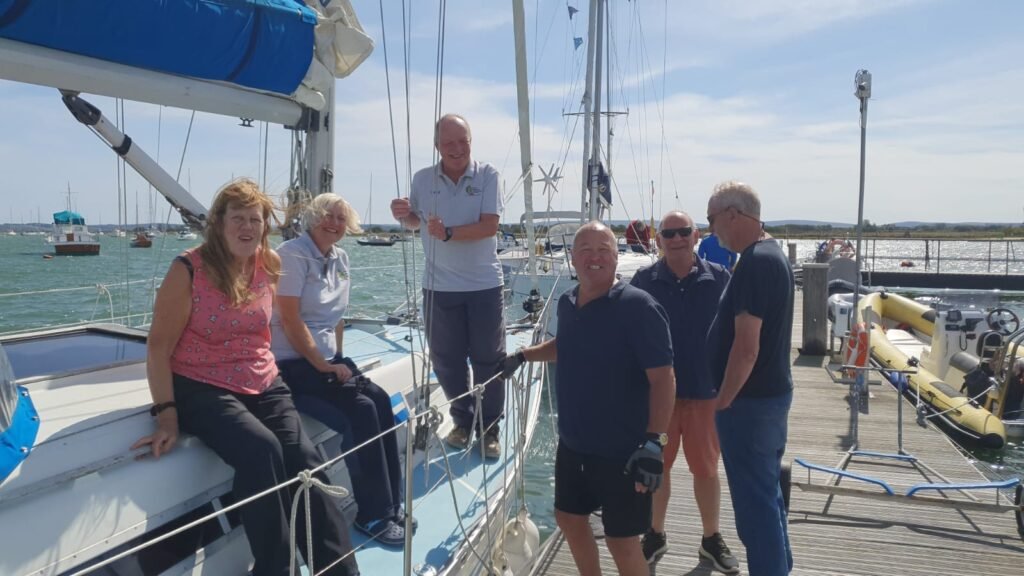
Rallies happen because owners bring boats, and the club’s job is to make that worth doing.
You get crew who want to be there — people who have put their names down, not been talked into it. You get a programme fixed months ahead, so the weekends are in the diary by March and somebody else has booked the berths and the Saturday dinner. And you get company on passage, which is the part most owners say they miss when they sail alone.
Crew share the berthing, the fuel and the food. Nobody is expecting a free weekend on your boat.
What’s asked of you is small: say early in the season which rallies you’re doing and how many berths you have, and take the crew you’re matched with. A fair number of them come back.
And if you’d rather not sail at all
Some members come for the dinner and drive home
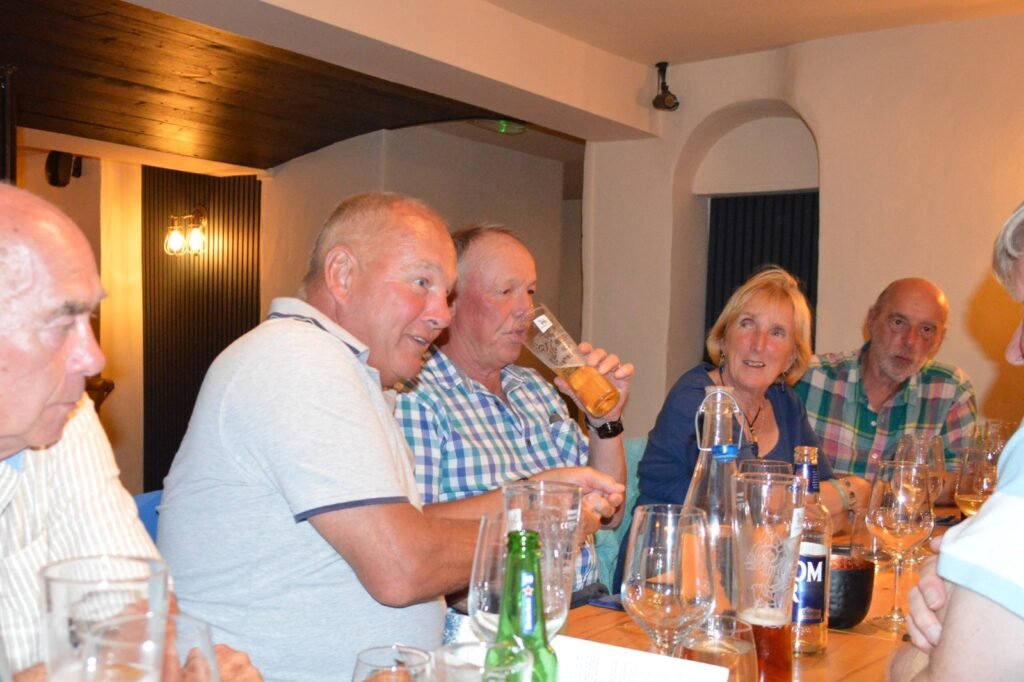
It happens on most rallies. Members who don’t sail, or who aren’t sailing that particular weekend, drive down for the Saturday evening meal and join everyone at the table.
It is the lowest-effort way to find out whether any of this is for you: you meet twenty people who’ve just spent a day on the water, and nobody has to put you on a boat to do it.
The Saturday meal is the part of a rally that everyone turns up for, including the people who didn’t sail to it.
Meals are booked and paid in advance through the club, so the number at the table is known before anyone sets off.
The shape of a season
Roughly the same every year — the dates are on the calendar
April
Shakedown
The first weekend out. Finding what stopped working over the winter.
May
Spring rally
Often the best attended of the year.
June
Early summer
A weekend up harbour, with something competitive attached.
July
Summer Cruise
Ten days rather than a weekend. Further afield, and the one to take leave for.
August
Long weekend
Three or four nights, sometimes right round the Island.
September
Two nights
The harbours east of the Solent, while the weather holds.
October
Last of the year
A short hop, a long lunch, and the boats go away for the winter.
Where we go
Mostly the Solent — but not only
Almost everything is within a day’s sail of the central Solent, which is what makes a weekend possible at all: leave after work on the Friday or early on the Saturday, and be somewhere worth being by the afternoon.
The summer cruise is the exception. With ten days rather than two, boats get west to Poole and beyond, or east past Chichester, and the anchorages become part of the point rather than somewhere to stop.
Once in a while the club does something entirely different — a trip up the Thames has appeared on the programme more than once.
- East Cowes
- Yarmouth
- Lymington
- The Hamble
- Gins Farm
- Beaulieu River
- Newtown Creek
- Bembridge
- Chichester Harbour
- Langstone
- Hurst
- Poole
- Round the Island
- The Thames

What actually happens
A rally weekend, start to finish
1
Friday evening or Saturday morning
Boats leave from where they’re kept. Crew join at the boat, or travel down with the skipper.
2
Saturday, on the water
A few hours’ sailing to the rally harbour. Long enough to be a passage, short enough to be sociable.
3
Saturday evening
Rafted up, then ashore together for the meal — and whatever has been organised alongside it.
4
Sunday
Home, usually in company for part of the way. Back by the evening.
There is almost always a trophy involved
Not racing — the club doesn’t race. But a rally weekend generally has something attached to it that produces a winner, and the trophies have been going round the membership for years.
They are taken exactly as seriously as they deserve to be.
The Challenge Trophy
Awarded on the longer rallies
The Big Buoys Challenge
Navigation, loosely defined
Inter-club skittles
Ashore, against another club
The line-throwing challenge
Harder than it looks from the pontoon
Getting a place
For members — how a rally is actually put together
Skippers say first
Owners tell the Rear Commodore which rallies they’re doing and how many berths they have.
That’s what fixes the size of the weekend, so the earlier the better.
Crew put their names down
Say on a Thursday evening, or through the members’ area, which rally you’d like to go on and what experience you have.
Skippers then choose, balancing experienced hands against people who are learning, and yours will be in touch directly about where to be and when.
What it costs
Crew share the weekend’s running costs — the berthing and the fuel, split between everyone on board — and contribute towards the breakfasts and lunches the skipper buys for the boat. That usually comes to £30 to £50 a head.
Evening meals are separate. The Saturday dinner ashore is booked and paid for through the club beforehand.
When there aren’t enough member boats for a rally the club charters one. A chartered weekend is nearer £200 to £250 a head, and you’ll know which it is before you commit.
Not a member, and never sailed?
That describes a good proportion of the people who now own the boats. Come to a Thursday evening first — there’s nothing to book and nothing to pay — and say you’d like to go on a rally. It goes from there.